
Ongoing adventures in cheating death.
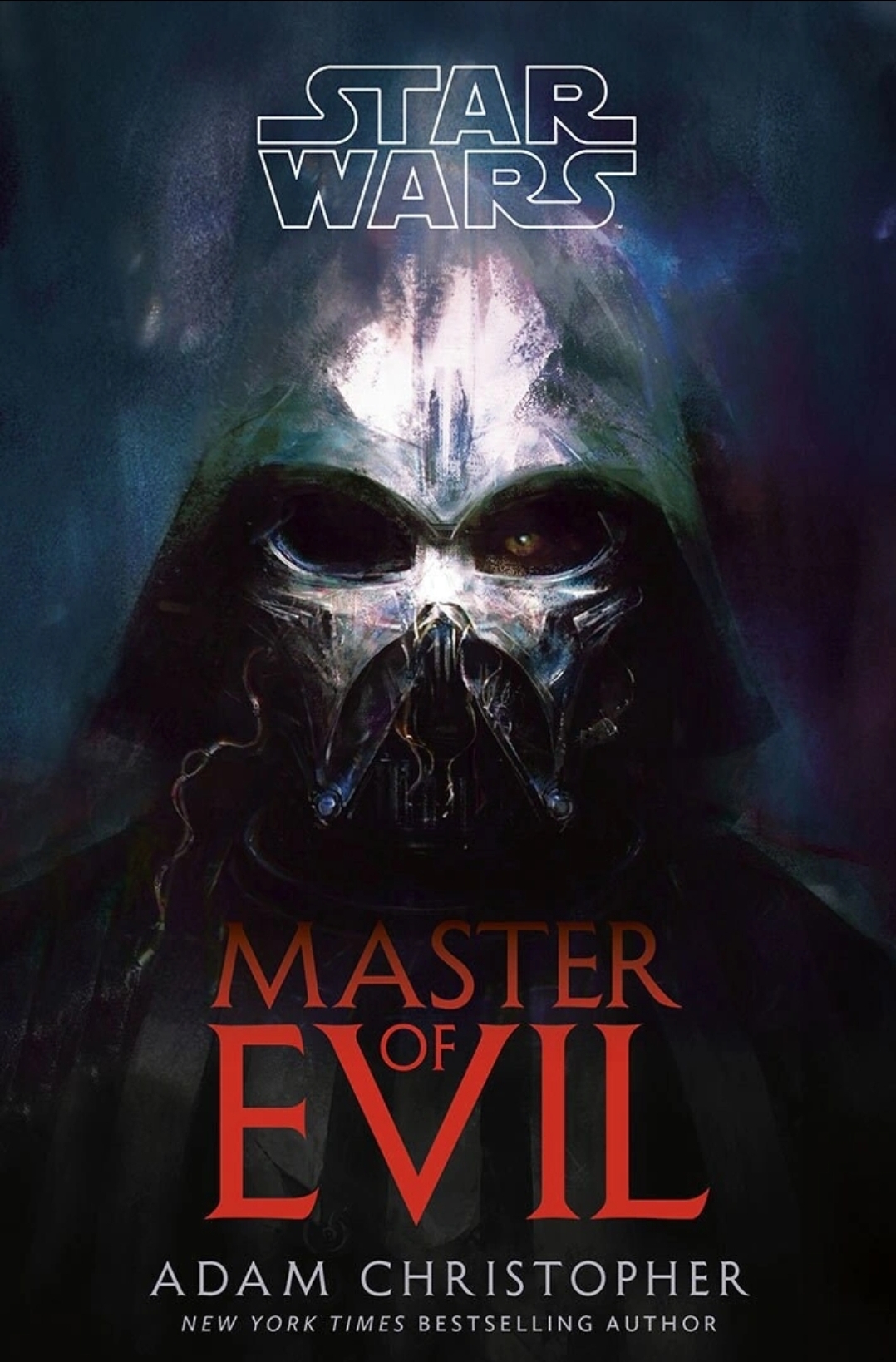
Star Wars: Master of Evil (2025) by Adam Christopher is a novel that continues a well-explored thread in the canon – Darth Vader’s mission to cheat death, keep those he cares about from dying, and maybe even bring those he has lost back from the other side.
The results are a mixed bag of tasty nuggets of lore, new perspective on previous events, and maybe a feeling of wanting more in the end.
Before this book was released, there was some concern regarding whether it would tread on any Darth Vader comics. And unlike certain TV shows (looking at you, Bad Batch) this book slots right into a time skip between issues 5 and 6 of Charles Soule’s run on Darth Vader (2017, Marvel.) The novel treads some familiar ground with references to the comics, Vader recalling how he gained his lightsaber and bled the crystal per Sith tradition. In the early years of the Empire, Lord Vader is a busy man, and it’s great to see something that fits so well in the comic run for completionists without repeating itself too much or introducing retcons.
The novel opens with Count Dooku on a mission to the planet Diso, a test given to him by his Sith master and future emperor, Darth Sidious. This temple contains dark secrets and in an imaginative display of problem solving, Dooku brings in an experimental ship that can reconfigure its hull and hold spaces. Once excavated from deep inside a salt flat, the temple is wholesale removed from the planet. Dooku is successful at the time, but he will never complete the ultimate test, and he will perish in the last days of the Clone Wars before learning what the temple truly holds.
Some time later, after Lord Vader has taken the apprentice role under Sidious, this temple becomes a test once again. Lord Vader is tasked with visiting Diso again to retrieve a shaman believed to be strong in the Force. This shaman is rumored to be a necromancer of sorts, bringing back the dead – an idea that, as we know, appeals very much to Darth Vader.
Despite appearing on the cover and the novel slotting into the continuity of Vader comics, Darth Vader is hardly the main character of this story. The standout of the novel’s new characters is Halland Goth, a colonel in the Imperial royal guard. Goth is tasked with a delicate mission – to observe and report on Darth Vader’s findings on the shaman and the temple, and determine if Vader remains loyal to the Empire with his new insights.
Goth is a layered, well-written Imperial officer. He has a record of achievements and was present for key events during Revenge of the Sith as well as the aforementioned Vader comics. He was in the room when Palpatine told the tragedy of Darth Plagueis the Wise to Anakin Skywalker, and later standing guard on stage for the destruction of hundreds of Jedi lightsabers in the days after the Jedi Purge. Halland Goth is tactful and reliable, exactly the kind of person who stands a chance of following alongside Vader and not getting himself Force-choked for incompetence.
Also worth noting, Colonel Goth has a chronic illness known as Kangly’s syndrome. This rare and fatal illness doesn’t have a lot of research backing it up, leaving the possibility of a cure distant. The disease causes fits of intense pain followed by increasingly frequent episodes, weakness, and fatigue as it progresses. Halland is able to keep his symptoms in check for some time, feeling shame that he may not be fit to continue serving the Empire. Unfortunately, the sol-nitro medication that treats his pain becomes less effective as the disease progresses – Halland is buying time with every dose from his protocol droid (and best friend) TC-99.
Reader, I won’t waste too much of your time explaining Darth Vader to you, but his role in this book is worth exploring and questioning (I do not recommend this book as your first Star Wars read, but that’s not a mark against the quality of the book – you do need to know Vader outside of the films cause he gets up to a lot of stuff besides chasing Luke Skywalker around) In the early days of the Empire, Lord Vader is still very-much pursuing his goal of cheating death with the dark side of the Force. Through the comics, this goal has manifested in multiple attempts at bringing his beloved Padme back from the dead – this gives us locations like his castle on Mustafar, run-ins with the spirit of Sith lord Darth Momin, and in this book, some Force users on the planet Diso who don’t ascribe themselves to the dark or the light. This family passes their powers down their line and like most Force users who run into Vader, it doesn’t end work out well for them.
Darth Vader is arguably not the main character of this novel, and that comes down to a problem some Star Wars books have with intent versus marketing. Most of this book is spent with Halland Goth, later the family of Diso, and even clone troopers under Vader’s command. It’s sold as a journey for Vader into the dark side itself…which has kind of been done at this point. Vader’s comic runs which, again, this book slots into nicely, deal with Vader finding artifacts and obscure methods of manipulating the Force to his will. And the thing is, you know Vader cannot succeed here or get much of anything out of this journey. Vader cannot solve the mystery of cheating death or inch much closer to that goal because we know he never solves that problem. The Aftermath trilogy by Chuck Wendig saw criticism for being the “next chapter” after the original trilogy and then featuring a mostly new cast of characters across three novels – and it was a marketing problem when the books were sold one way and written in another direction through no fault of the author. Master of Evil has a similar issue – it’s a Vader story with very little new to say about Darth Vader, and it’s best bits are about new characters.
Despite not having any groundbreaking moments with our favorite Sith Lord, the novel does not struggle to slot in its new cast and give them moments to shine. Colonel Goth is caught in a web of anxiety, balancing his life between serving the Emperor while reporting on his top enforcer. TC-99 can slot in different droid matrices – essentially hard drives he’s found – that give him different personalities and abilities. None other than Appo of the 501st Legion pops up in the third act, detailing his survival of Jedi encounters at the temple during order 66. And the final act culminates in a spaceship that can change its shape at the will of an isolated super tactical droid who believes the Clone Wars haven’t ended. While I don’t recommend this one as your first foray into Star Wars novels, it packs in a lot of details for people who have read and seen a lot of other projects.
So, to wrap this book up. If you’re just stepping into the extended canon of Star Wars, do not start here. Read other things first, then take this fun side journey that is tinged with the horror of an anxiety-ridden Imperial caught between two masters. While the book struggles to do new things with the character on the cover, there are others that make the journey worthwhile and interesting. Without getting into deeper spoilers, the novel did not stick the landing for me personally – but the journey (even if it wasn’t primarily about Vader as-marketed) was a good read.
This book gets four doses of sol-nitrol out of five from me.
 TheEmpiresElite.com